Pedro Páramo and Miguel Páramo: Father and Son
Pedro PáramoPedro Páramo and Miguel Páramo: Father and Son is a portrait of paternal protection turned into impunity. Pedro excuses Miguel’s violent conduct, even accepting blame for it in conversation with his agent Fulgor Sedano, yet dismisses the people harmed by his son as though they do not exist. Miguel’s death brings that contradiction into the open: Pedro does not display grief, but he attends his son’s funeral and uses his wealth to press for absolution.
Identity and the Paternal Bond
Miguel is Pedro’s son, and the surviving exchanges show Pedro treating him as both a child to be indulged and a person whose actions need not carry consequences. Fulgor estimates that Miguel may be seventeen, but Pedro calls him a baby and argues that he is not yet strong enough to kill anyone. Rather than treat the accusation against him as a reason to restrain him, Pedro tells Fulgor to attribute Miguel’s wrongdoing to himself. The language of fatherly protection thus becomes a means of denying Miguel’s responsibility.
Fulgor’s account also conveys the pace and danger of Miguel’s conduct. He says Miguel loves a fight and lives so violently that he seems to race against time, predicting that he will eventually lose. Pedro answers by minimizing the warning: Miguel is still a child, and Fulgor may be right to think him young. The exchange establishes a sharp difference between Fulgor’s apprehension and Pedro’s indulgence. The father hears that his son is dangerous but declines to treat the danger as a reason to intervene.
Protection and the People Miguel Harms
Pedro’s protection extends beyond defending Miguel in conversation. Fulgor reports that a woman came to mourn her husband, whom she accused Miguel of killing. Fulgor offered her fifty hectoliters of maize to forget the matter and promised compensation by another means, but she refused. Her grief and rejection of the offer do not lead Pedro to investigate or acknowledge her claim. When Fulgor says the people are strangers to him, Pedro concludes that there is no reason to trouble himself because they do not exist.
That dismissal sits beside Pedro’s instruction that Miguel’s offenses be counted as his own. The apparent assumption of responsibility does not provide redress: it gives Pedro control over how the acts are described while erasing their victims from consideration. At the funeral, Pedro names further grievances against Miguel, including the alleged murder of Father Rentería’s brother and the assault on the priest’s niece, Ana. He recognizes that these acts give the priest reason to hate Miguel, even as he asks him to put them aside. In this relationship, paternal loyalty protects the son from judgment without repairing the harm done to others.
Miguel’s Death and Pedro’s Response
Before daybreak, a servant from Media Luna tells Father Rentería that Miguel has died and that Pedro asks him to come. The servant says Miguel had been brought back less than half an hour earlier, although the doctor who examined him thought he had been dead for some time. The horse Colorado had returned alone, restless enough to keep people awake; the servant says it had neither eaten nor slept. This report reaches the priest, who already knows of Miguel’s visit and farewell, before Pedro’s response at the estate is described.
When Fulgor tells Pedro that Miguel is there, Pedro first asks what has been done to him, expecting to hear that someone killed him. The account then shows Miguel laid on bare boards after his mattress is removed, his hands crossed over his chest and his face covered. Pedro remains expressionless and detached. He says he is beginning to pay, but the narration explicitly records that he feels no pain. The difference between his words and his visible response leaves the cost of Miguel’s death acknowledged but emotionally unresolved.
Funeral, Forgiveness, and Authority
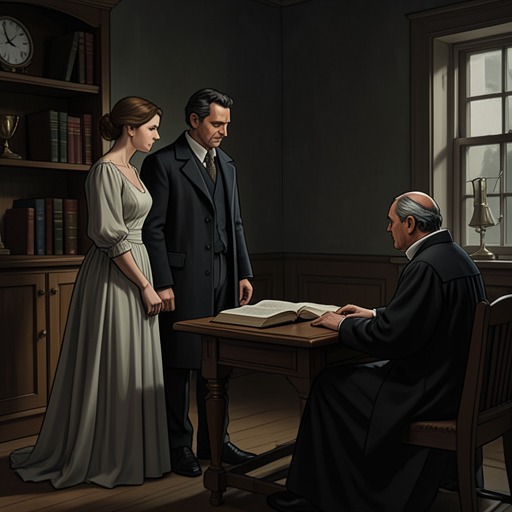
Miguel’s body lies on a catafalque in the church, surrounded by new candles and flowers. Pedro waits alone behind it for the absolution to end. Father Rentería initially says he will not intercede for a wicked man whom God would not welcome, concealing the tremor in his hands; nevertheless, he performs the rite. He sprinkles holy water over the body, murmurs a prayer, and kneels as the congregation responds. Pedro later kneels beside him and asks him to forgive Miguel as God may have done.
Pedro’s appeal is not separate from his power. He places a handful of gold coins on the prie-dieu after naming the grievances against his son and urging the priest to forget them. The scene joins a religious ritual of pardon to a material offer from the father whose influence has already helped shield Miguel from consequences. Father Rentería’s eventual performance of the rite contrasts with his initial refusal, while Pedro’s money makes visible the unequal authority behind the request.
The Meaning of the Relationship
The relationship is marked less by demonstrated tenderness than by Pedro’s persistent permission. He calls Miguel a child when Fulgor warns of his violence, assumes responsibility for the accusations without changing the conditions that protect him, and treats unknown victims as nonexistent. At the same time, he seeks a funeral and absolution for his son, asking that the offenses be put aside only after acknowledging them. His conduct therefore combines familial defense with an unwillingness to grant equal reality to those Miguel has harmed.
After the funeral, the sound of Miguel’s horse remains in the courtyard. Pedro orders Fulgor to have the animal put down the next day so that it will not suffer, then complains that the women’s mourning is excessive because Miguel is his dead son. The episode offers no simple expression of grief: Pedro speaks of payment and attends the rites, yet says he feels no pain and turns the mourners’ sorrow into a matter of ownership. The bond’s decisive consequence is this imbalance: Miguel receives paternal protection and public mourning, while his victims’ claims are dismissed or asked to disappear.